Inside Will Brahm’s Approach to Melody, Harmony, and Modern Jazz Guitar
Will Brahm shares insights on practice routines, closed-position playing, improvising over complex harmony, and creating expansive textures in a trio setting. He also discusses his current gear, composing process, and upcoming album.
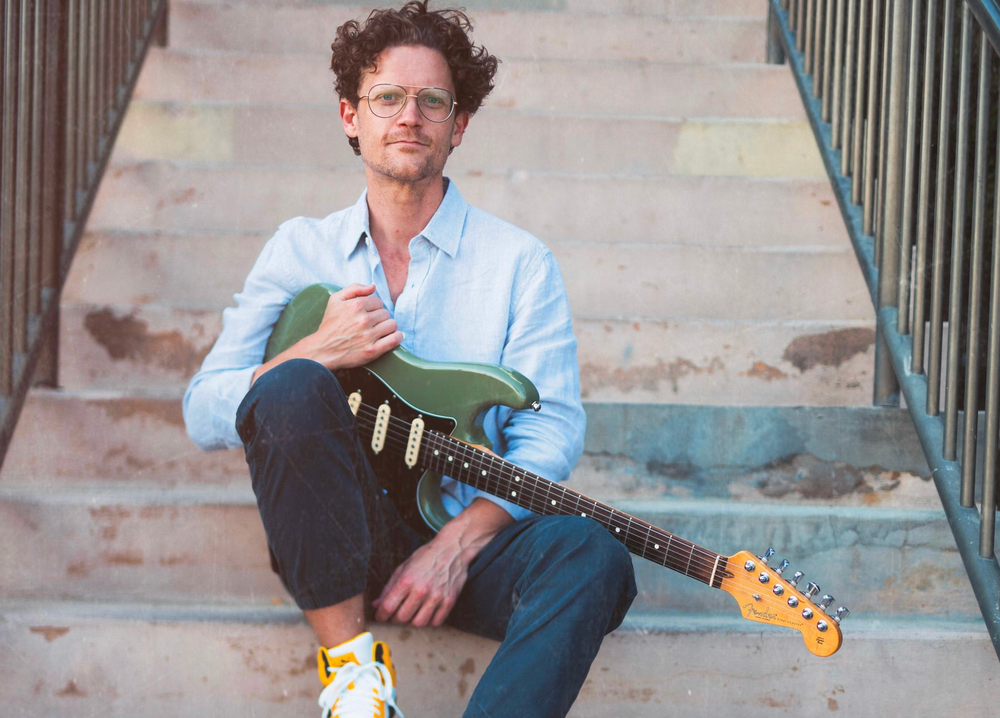
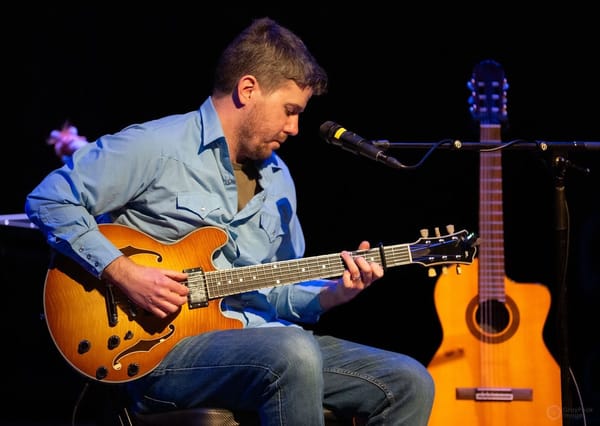
Will Brahm is a Los Angeles-based guitarist and composer known for his creative blend of jazz, rock, and modern improvisation. Originally from Portland, Oregon, he picked up the guitar in eighth grade and quickly became obsessed with music. After high school, Brahm moved to Southern California to study jazz guitar at California State University, Long Beach, where he developed his skills under respected guitarist Ron Eschete.
Early in his career, Brahm built a name for himself as a member of the New West Guitar Group, touring across the United States and around the world. Those years on the road helped shape both his playing and his musical identity. In 2019, he joined the touring band of legendary trumpeter Arturo Sandoval, performing on major stages internationally. Around the same time, he was also named a semifinalist in the Herbie Hancock International Jazz Guitar Competition.
As a solo artist, Brahm has released several albums that highlight his melodic approach, expressive tone, and wide range of influences. Albums like Homenaje, Venture Atlas, and Distance to Empty showcase a sound that blends jazz harmony with elements of Americana, rock, and world music. His playing is thoughtful and emotional, while still full of energy and technical skill.
Today, Will Brahm continues to record, tour, and collaborate with musicians from many different backgrounds. Whether he’s playing acoustic guitar, electric guitar, or composing new music, he brings a unique voice to every project. His ability to combine strong melodies with adventurous improvisation has made him one of the most exciting modern guitarists on the jazz scene today.
➡️ We caught up with Will, and he shared his daily practice structure, why cycling ideas up and down the neck transformed his playing, and how closed-position scales changed the way he hears harmony. He also talks about creating huge ambient textures in a trio setting, staying melodic over complex jazz changes, and the gear behind his signature sound.
🎸 Q & A
What does an ideal practice session look like for you these days?
I set a timer for 35 minutes each day and focus on warmup/harmony routines. Triad cycling, inversions etc. Then I set a timer for another 35 minutes and work on composing/arranging my music for upcoming shows and recordings.
What is one practice habit or approach that most accelerated your progress—and why did it work?
The most valuable way for me to practice is to follow a cycle completely UP and then back DOWN the neck in a single movement. It helps us gain fluency at any point in the neck.
Was there a musical concept or realization that fundamentally changed the way you approach the guitar?
Focusing on playing CLOSED scale positions, 5 inside each octave of the neck.
When we focus on closed scale/arpeggio positions INSTEAD of 3 note per string scales, we can best outline collective harmony.
What’s your current go‑to gear or setup when recording or performing live?
My antique olive green Stratocaster, my Fender Deluxe Reverb, and my ever-shifting pedal board!
A lot of players struggle to sound musical over fast-changing jazz harmony. When you’re improvising over complex changes, what are the key things you’re listening for that help you stay melodic?
I focus on having the whole form playing in the back of my head. Once we really FEEL the form in our body, we can cascade over the changes, build slow musical phrases, or jump in and outline every passing chord.
Your playing often balances lyrical melodies with dense harmonic movement. When you’re writing or improvising, how do you think about melody vs. harmony—do you start from one or the other?
The “bones” of my writing comes from the bass motion and the melody motion. How do those two lines interact. Is it strong counterpoint? Then I can fill in 1 or 2 notes in the middle. Most importantly, does the MELODY stay clear and COHERENT to the listener?
Your trio recordings have a huge sound despite being just three instruments. What are the key guitar techniques or musical approaches you use to fill space in a trio without overplaying?
I use multiple delay pedals to create a “pillow” of ambience and dimension under my sound, and behind my sound.
My goal is to strike a chord or a note, and when I release it there are still artifacts of those notes lingering behind me. It’s like a sustain pedal on a piano. My intention is to create a pulsating sonic bubble of sound and emotion through my instrument.
What’s next for you musically—any projects or goals you're working on?
Currently mixing my upcoming album “TRUST.” I’m about to release the third single off of it, called “In Dreams.” On average I play one show a month with my band, and a tour every January. I’d like to add a summer tour onto the books!
⚡ Lightning Round
One album every guitarist should hear?
Kurt Rosenwinkel a Star of Jupiter
Desert island guitar and amp?
Fender Deluxe Reverb ‘65 reissue
What guitarist should everyone know about?
Any Timmons
Recommended Listening & Watching:
Will's new single 'In Dreams':
The Will Brahm Quartet playing Herbie Hancock's 'Dolphin Dance':
Will Brahm Trio playing Chick Corea's 'Bud Powel' Live at The Mint Los Angeles: