Matthew Stevens on Finding Space, Trusting Your Instincts, and Staying Curious
Guitarist and composer Matthew Stevens talks about his evolving practice routine, the importance of rhythm and space, and the creative process behind his new self-titled album. He also shares lessons on trusting your instincts, collaborating with others, and finding your own voice on the guitar.
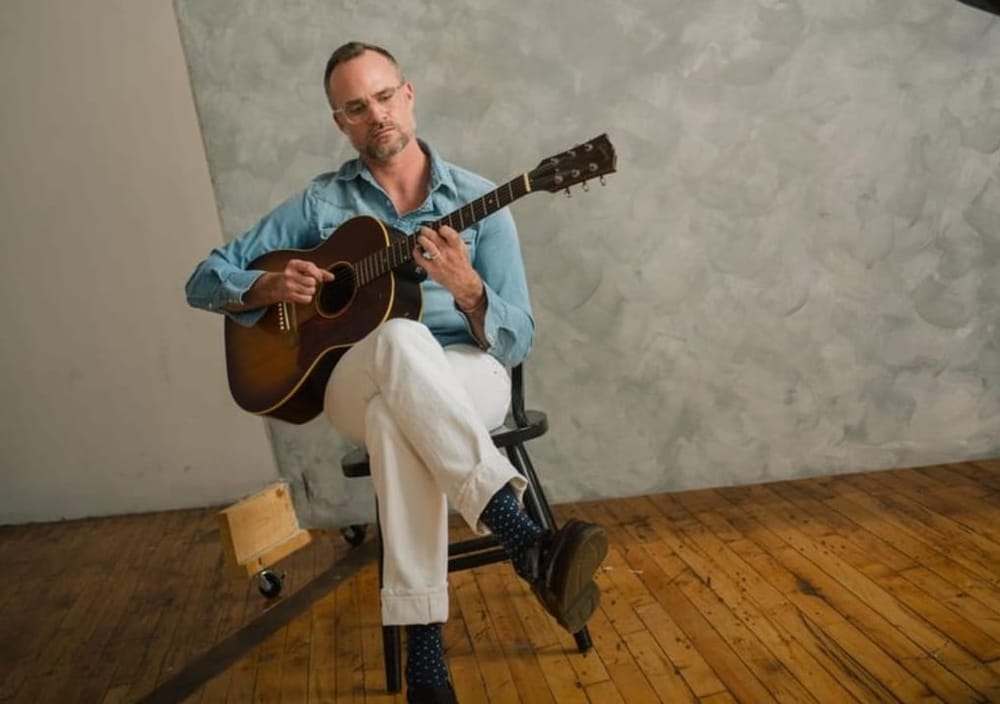
Matthew Stevens is a Toronto-born guitarist, composer, and producer who has become one of the most distinctive voices in contemporary jazz. His playing draws from jazz, rock, ambient music, folk, and other styles, giving his music a sound that can be both adventurous and melodic. Over the course of his career, he has developed a reputation as a thoughtful musician who is equally comfortable improvising, writing, and producing.
Stevens has worked with a wide range of acclaimed artists, including Esperanza Spalding, Terri Lyne Carrington, Chief Xian aTunde Adjuah, Jamire Williams, and Walter Smith III. He has also released several albums of his own, including Woodwork, Preverbal, and Pittsburgh. His work has earned three Grammy nominations and a Grammy win for his work with Carrington on New Standards Vol. 1.
In 2026, Stevens released his new self-titled album, Matthew Stevens, on Candid Records. The album brings together acoustic and electric guitar with genre-blurring original songs and carefully chosen covers. It also features an impressive group of collaborators, including Terri Lyne Carrington, Jeff Parker, Joel Ross, Anna B Savage, and Corey King.
The album represents something of a new chapter for Stevens, drawing on 20 years of experience as a guitarist, producer, and bandleader. Rather than fitting neatly into one style, Matthew Stevens reflects his wide-ranging musical interests while putting his own voice front and center. The result is a personal and confident record that shows why Stevens has become such an important figure in modern jazz.
➡️ In this conversation, guitarist and composer Matthew Stevens talks about how his practice routine has evolved, the importance of rhythm and space, and why sometimes playing less can make a performance more powerful. He also shares the creative process behind his new self-titled album, the musicians who have influenced him, and the simple guitar setup he relies on. Along the way, Stevens offers thoughtful advice on staying curious, trusting your musical instincts, and being open to the ideas of the people you play with.
🎸 Q & A
Can you describe what a typical practice session looks like for you these days? How has that changed over the years?
These days, my practice is generally broken up into a few different areas: maintaining and refining my technique, keeping my physical connection to the guitar as strong as possible, writing my own music, and learning repertoire for different concerts and tours.
There are also things I’ve done consistently for over 20 years, like playing through the Segovia scales each morning.
More recently, I’ve also started making a piece of what I might call repertoire part of my routine - essentially, a piece where I’m not improvising the notes or harmony. That allows me to focus on all the other aspects of music that are so important like phrasing, dynamics, touch, and so on. I find it really incredible how much room there is to improvise using those elements alone.
One thing I did much more when I was younger, and that I’d really like to get back to, is sitting with the guitar for a couple of hours without a specific agenda and just seeing where playing leads me. In the past, that would invariably lead me to discovering something I wanted to improve upon or investigate further. I’d make a note of it and incorporate it into the small group of things I was working on at the time. That was really valuable and invigorating to me, and it’s something I’d like to make more room for again.
What is one exercise you return to again and again?Looking back, what's one musical concept that permanently changed the way you hear or play the guitar?
I don’t know that you’d call this an exercise per se, but one thing I come back to again and again is practicing improvisation using as many different rhythmic subdivisions as I can think of, but working with only one subdivision at a time.
So, if I were working with eighth-note triplets, for example, it wouldn’t be about simply playing constant eighth-note triplets. It would be about seeing how many different phrases and ideas I could express using that particular rhythmic grid. I might do it over a song, or just freely. Really whatever feels useful.
I’ve come to think about subdivisions in a way that’s similar to keys. I want to be equally fluent with all of them, in the same way that I want to be fluent in every key. Naturally, some come more easily than others, so it becomes a matter of identifying the ones that need work and bringing them up to the level of the others.
As for the second part, I think I was able to articulate for myself in my late teens something that we’re all probably aware of intuitively: first and foremost, this is a rhythmic language. From that, I came to understand that although there are infinite ways of expressing yourself, a musician’s sound, feel, and rhythmic command are among their most important attributes.
That’s always been a kind of north star for me. I come back to it constantly. If those elements aren’t at the front and center of whatever I’m playing, then whatever else I’m doing probably won’t be nearly as impactful as it could be.
Your compositions often feel spacious and cinematic. When writing, do you begin with melody, harmony, rhythm, or simply a sound you're chasing?
I begin with anything that feels fresh and exciting to me, and it could be any of the things you mentioned. Sometimes I let it unfold almost like a stream of consciousness, kind of like a linear narrative, and other times I’m very specific about not straying too far from whatever I’ve identified as the central theme or idea of the song.
At the end of the day, I just want to feel excited about it, and I’ve learned to trust that feeling. I find myself saying this pretty often, but the music I connect with most has this simultaneous sense of being fresh and surprising while also feeling inevitable and familiar. I strive for that in my own work, and I feel best when I approach it from the perspective that the music isn’t really mine, but that I’m participating in something that has always existed and will continue to exist.
Practically speaking, I also often start from a place of being more certain about what I want to avoid than what I want to do. Removing options and having to turn away from what might feel obvious or too familiar has often been a really useful way for me to find my way toward something that feels more interesting.
Many guitarists focus on playing more notes. Your playing often demonstrates the opposite. How did you develop your sense of space and restraint?
It’s not something I’ve developed consciously. I think it’s probably a combination of my limitations, my taste, and having recorded a lot. I’ve often felt, listening back to myself, that whatever I played could be better if it were just a little more self-edited and focused.
As I gained more confidence and conviction in my own touch and feel on the guitar, I also became more comfortable playing less and letting what I did play just kind of hang out in the space of the music. I was more or less at peace with what a note sounded like when I played it, so I didn’t feel the same need to add something else.
The other thing I’ve noticed is that when you play less, the whole performance can become more conversational. You’re no longer the one person responsible for keeping the music moving forward. In that sense, it not only takes some pressure off of you, but can actually put you more in service of the whole performance.
When you compare your new record to your earlier work, what do you hear that feels most different about your writing and playing?
It’s really hard to have a completely objective perspective on your own work. I think we all tend to feel like the last thing we’ve done is our best work, which of course isn’t necessarily true, and is subjective anyway.
While this record may feel different on the surface, I think I’m really continuing to iterate and reiterate my taste in music, which naturally evolves and sharpens over time. Being so close to it, I can hear all the things that carry forward from record to record including the way I hear and use harmony and melody, my language as a guitarist when I improvise, and so on. I think we all have those things in us, and part of the job is to be curious about them and develop them, and to study them in the same way you would study someone else’s music.
If there’s one thing that jumps out at me as different, it’s that this record feels less exclamative than some of the earlier ones. Maybe that’s partly because I’m in my 40s now and feel more comfortable with who I am. I feel less of a need to prove anything to anyone, including myself, and I think that probably finds its way into the music.
What's one lesson you learned while making this record that other musicians could apply to their own creative work?
I think one of the biggest lessons for me was learning to trust the people I’m making music with. I’ve found that strong musical connections usually reflect strong personal ones, and that the two tend to deepen each other over time. That’s definitely been my experience with everyone involved in this record. Sometimes the music strengthens the relationship, and sometimes the relationship makes the music stronger.
I think that’s important because trusting your own instincts doesn’t mean you have to be protective of them. I trust what I hear, but I also trust the people I’m working with, and when there’s that level of mutual respect, you can let other perspectives challenge your ideas without feeling like you’re compromising your own voice.
Sometimes someone reinforces what you’re already hearing, and sometimes they take you somewhere you wouldn’t have gone on your own. I think learning to recognize the value in both of those things and to be genuinely open to them is something that can make the music better.
What guitarists or musicians have influenced you the most?
In no particular order - Grant Green, Adam Rogers, Daniel Lanois, John Scofield, Ed Bickert, Brian Blade, John Fahey, Wayne Shorter, Jimi Hendrix, Herbie Hancock, Freddie King, John Coltrane, Pat Metheny, Billie Holiday, Kurt Cobain, Milton Nascimento, Brad Mehldau, Tony Williams, Justin Vernon, Joni Mitchell and many others I'm forgetting to mention.
What gear (guitar/amp/pedals) are you using lately—and why?
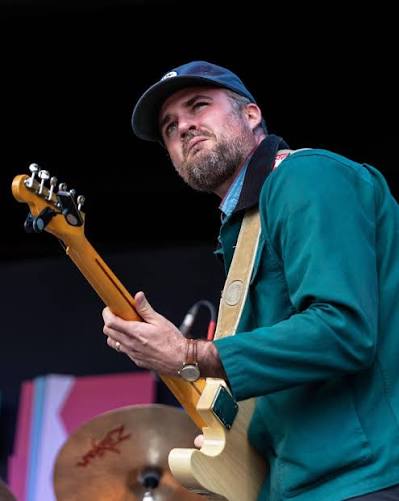
I use a pretty simple setup, and I’ve had essentially the same setup for quite a while. I have a 70th Anniversary Fender Broadcaster reissue that I was given during the pandemic, when I couldn’t get my other Tele repaired, and I’ve really found a vibe with it. I usually pair it with either a Vox AC30 or a ’68 Fender Princeton, and I have a few pedals I use pretty consistently—a Strymon Deco, a Flint, and an old Boss DD-6.
I like the Tele because it feels like the most blank canvas to me. Other guitars I’ve played have sometimes had a tendency to push me toward things that feel less personal, whereas with the Tele I feel like I can bring whatever I want to it without the guitar suggesting too much.
I really like the AC30 because of how punchy it is and how even it feels across the registers. It feels like the notes just jump out of the speaker. The low register never feels muddy and the high register never feels thin, so there’s a really consistent sense of presence across the instrument.
⚡ Lightning Round
One album every guitarist should listen to?
Freddie King - Getting Ready...
Desert island guitar and amp?
Telecaster / Vox AC 30
What guitarist should everyone know about?
Lenny Breau