Alon Albagli on Finding Your Own Sound, Practicing Bebop, and Creative Improvisation
From blending different musical styles to exploring the teachings of Barry Harris, guitarist Alon Albagli shares his approach to developing a personal sound, getting more creative with chords and improvisation, and making the most of your practice time.
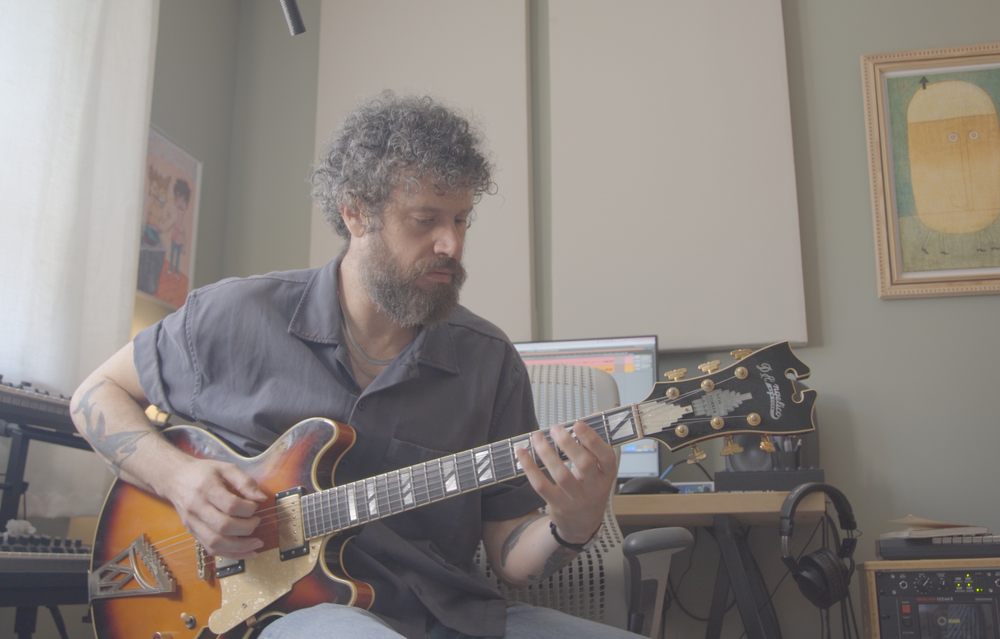
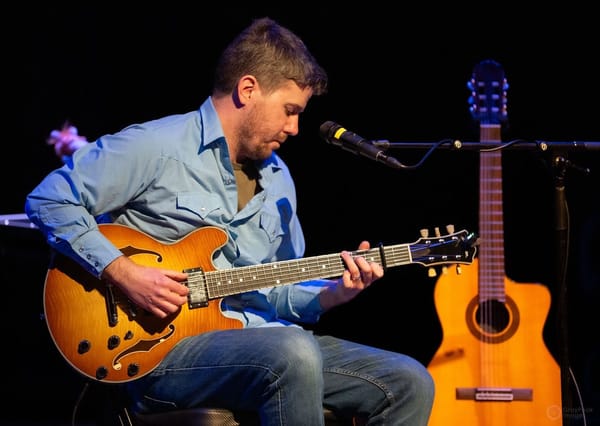
Alon Albagli is a Brooklyn, New York-based guitarist, composer, and music producer with a creative approach to making music. Blending elements of jazz, funk, and modern music production, Alon combines impressive guitar skills with a strong sense of melody, harmony, and groove.
Along with his guitar playing, Alon enjoys experimenting with different sounds, building beats, and creating original music. His work brings together traditional guitar techniques and modern production tools, showing just how versatile the guitar can be. Whether he's exploring an interesting chord progression or putting together a new track, there's plenty of creativity in his approach.
Alon is also passionate about sharing what he's learned with other musicians. He posts some great guitar lessons on YouTube and Instagram, covering topics like chords, improvisation, harmony, and practical exercises to improve your playing. His videos are a great resource for guitarists looking for fresh ideas and new things to practice.
What makes Alon's content especially enjoyable is his focus on both learning and creativity. Rather than simply showing guitarists what to play, he encourages them to explore new sounds and put musical ideas to use. If you're looking to expand your guitar vocabulary or find a little inspiration for your next practice session, his videos are well worth checking out.
➡️ We connected with Alon, and he shared how he developed his own sound by exploring different styles of music, what he's working on in his practice sessions these days, and some great ideas for getting more creative with chords and improvisation.
🎸 Q & A
How did you first get into guitar, and which players or musical experiences had the biggest influence on the way you play today?
I had a guitar on my living room couch throughout my childhood, so it was just a matter of time before my dad started teaching me Paul Simon and Neil Young songs.
Then I started taking private lessons with a local teacher who happened to be a super serious classical guitar teacher. He had me relearn how to hold the guitar and how to sit.
When I started playing jazz, my biggest influences were Jim Hall and Wes Montgomery.
Your playing brings together elements of jazz, funk, and other styles. How did you develop your musical voice, and what helped you move beyond simply playing the things you'd learned from other guitarists?
I personally had to go through being confused in terms of personal touch and unique voice - by playing and liking different genres like rock/blues guitar playing and fusion/jazz guitar playing.
Slowly I started just accepting my eclectic style and the fact that I borrow from different eras of guitar, and I actually keep exploring different genres that I love even if I don't play them as much at gigs - For instance, I don't play too many bebop gigs, but I practice bebop almost everyday.
When you're improvising, how do you balance thinking about harmony, scales, and theory with simply following your ears? Has your approach changed over time?
I personally always enjoyed theory. I went through practicing lots of scales, patterns, and running scales and arpeggios through chord changes. Getting diminished chords under my fingers, augmented scales, melodic minors, etc. I enjoy the “game-like” practice.
My approach is: in practice, you involve the brain, think about theory, and figure stuff out. And in playing, you let the brain rest and just put things together. And by “things,” I mean things that your fingers can do and your ears can hear.
And what I like doing is practicing both. I practice putting things together, lines that sound cool to me, and make sure I get them under my fingers. Then I practice putting them in a “solo” situation.
What does a typical practice session look like for you these days? Are there particular exercises, concepts, or areas of your playing that you consistently work on?
Yes! As mentioned, I practice a lot of bebop these days, using the teachings of the great Barry Harris. I'm practicing his scales and his concepts of what to do with those scales.
For comping, I'm working on his diminished scales, particularly the minor 6th diminished scale and the major 6th diminished scale, working through them in different 2-5-1 scenarios.
I've been also studying Mick Goodrick's book "Almanac of Guitar Voice-leading (Volume 1)". Super challenging exercises for drop 2s, drop 3s, drop 2&3 and more.. Highly recommended!
Was there a particular musical concept, exercise, or realization that completely changed the way you understood the guitar or approached improvisation?
I remember when I "unlocked" playing scales and arpeggios left to right down the fretboard - as apposed to in a "box". That was big for me. I was able to be more expressive by using the full range of the guitar. One example of playing left to right is the 4 -notes per string method of playing any scale.
You incorporate a lot of interesting harmony into your playing. How do you approach learning new chord voicings and actually incorporating them into your music rather than just memorizing shapes?
I like making up a shape, aka playing a 3- or 4-note chord, and then running it up through all the scale degrees.
Whatever sounds good to me. I sometimes take that specific shape I’ve found and use it for composing or in a jazz standard. For example, in C major, play something like G, A, and D together. Now move that shape up the scale, and you’ll find some pretty-sounding chords.
Your videos often explore interesting harmonic and rhythmic ideas. When you discover a new chord progression, riff, or musical concept, how do you go about developing it into something more complete?
If you transcribe a 5-second run from any solo, let’s say a Coltrane phrase, go ahead and run it through different chords, try it upside down, start from a different note in the scale, try it on another scale, play only a chunk of the phrase, then add something of your own. You see where I’m going with this, right? There’s more homework to be done after you’ve transcribed a solo.
What's something you wish you'd understood earlier in your development as a guitarist? What advice would you give an intermediate player who's trying to become more creative and musical?
I wish I had taken rhythm more seriously. I would start early on by evaluating my time, feel, and phrasing, recording myself, and listening critically. So my advice is: record yourself, listen right away, and truly hear whether your eighth notes sound good to you.
⚡ Lightning Round
Desert island guitar: If you could only keep one guitar, which would it be?
My 1979 ES - 335
Favorite guitar album: What's one album every guitarist should listen to?
This is hard. This is one that I've listened to so much: The Complete Full House Recordings (Live At Tsubo / 1962) by Wes Montgomery
Underrated guitarist: Who's a guitarist more people should know about?
Johnny Smith