Drop 3 Chord Voicings, Harrison Whitford, New Gibson ES-335 models
The newsletter for guitar players.

In this week's issue 📩
- Drop 3 Chord Voicings
- Spotlight and Q&A with guitarist Harrison Whitford
- Interesting News & Notes
Was this email forwarded to you? Subscribe here!
Guitar Practice
Drop 3 Chords
Drop 3 chords are a type of jazz guitar voicing created by taking a closed-position seventh chord and lowering the third-highest note by one octave.
This produces a wider, more open sound that sits naturally on the guitar fretboard, especially on the lower four strings.
Drop 3 voicings are compact, versatile, and work well for comping, chord melody, and solo guitar arrangements. They are commonly used for major 7, minor 7, dominant 7, and half-diminished chords, and they allow smooth voice leading across chord progressions while maintaining a full, rich harmony.
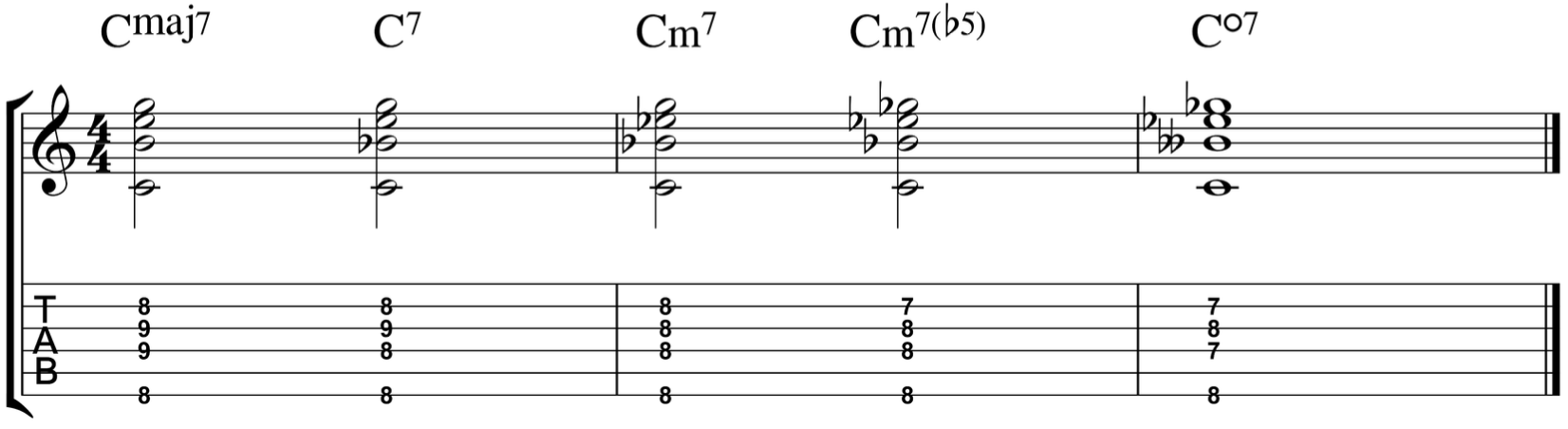
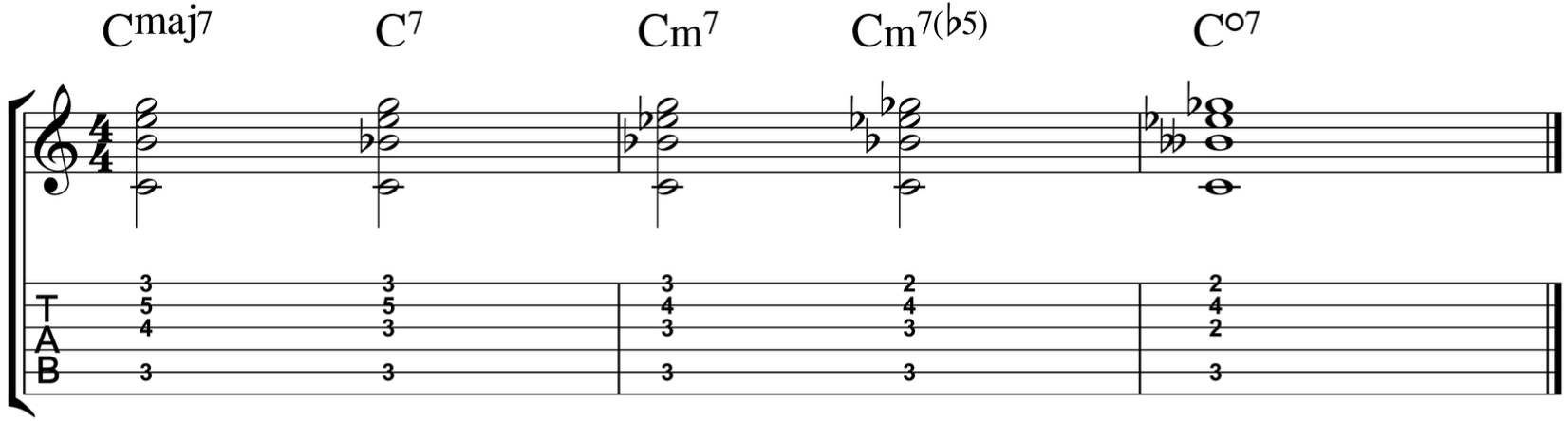
Let's do a few exercises to learn different Drop 3 chord shapes. We behind on a Major 7 chord, and then move one note at a time, going down to the Diminished 7th chord.
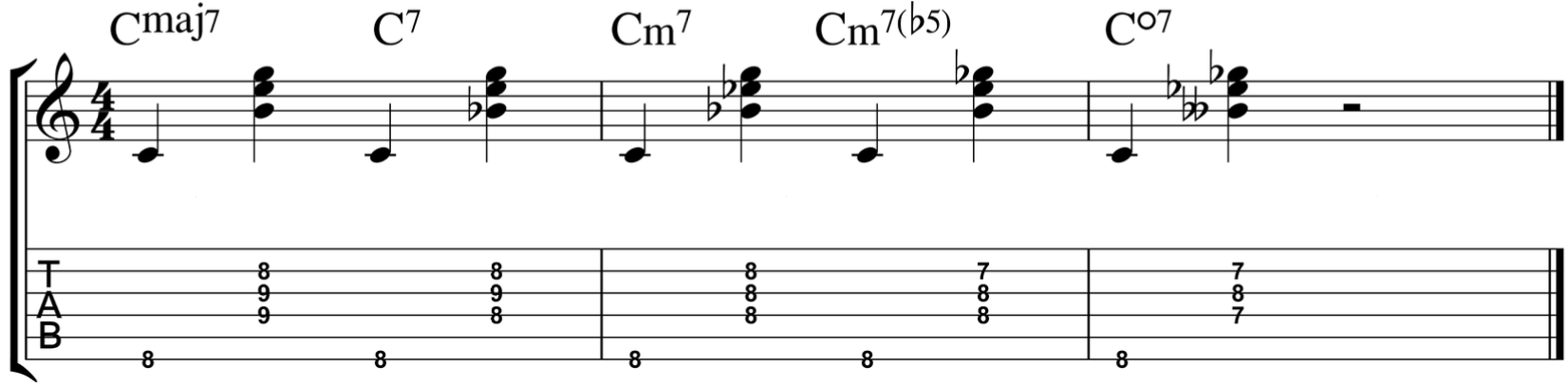
Each exercise goes in this order: Maj7, Dom7, m7, m7b5, Dim7
Exercise 1:
Exercise 2:
Exercise 3:
For this one, we change it up a bit, by separating the bass note.
Guitarist Spotlight and Q&A
Harrison Whitford on Alternate Tunings, Improvisation, and Letting Songs Lead the Way
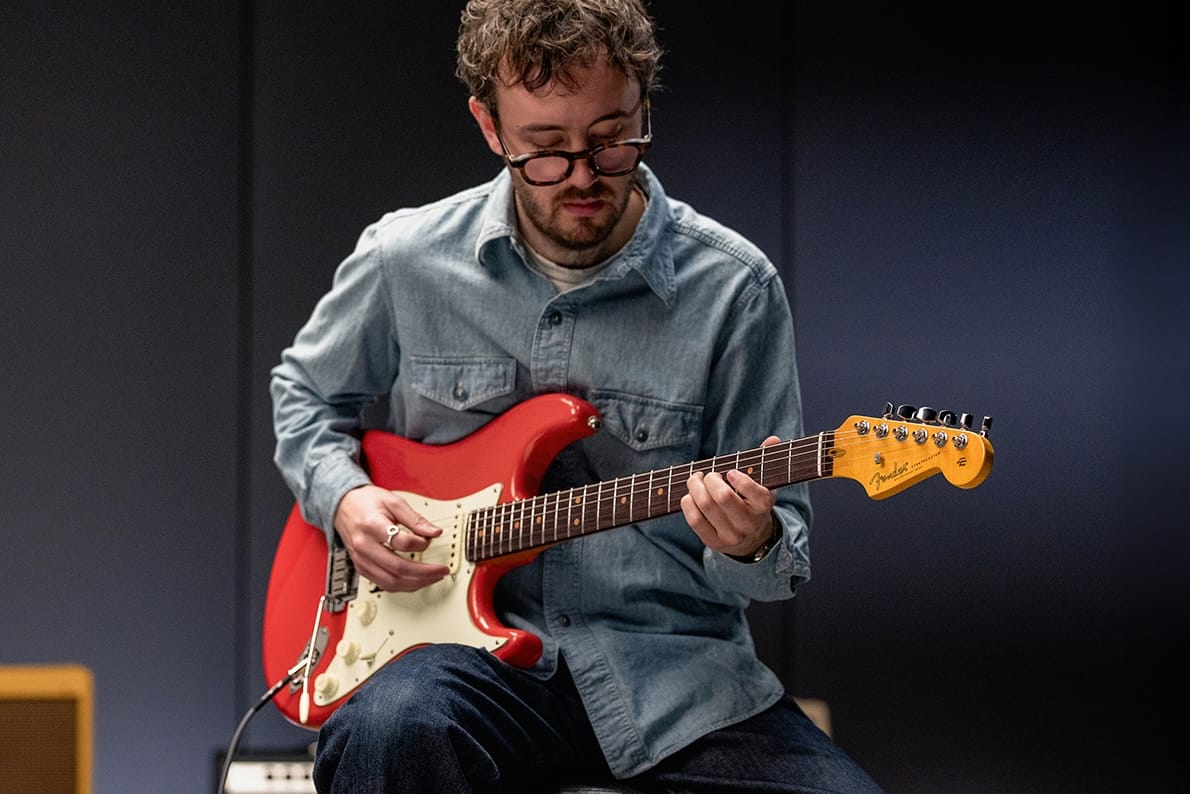
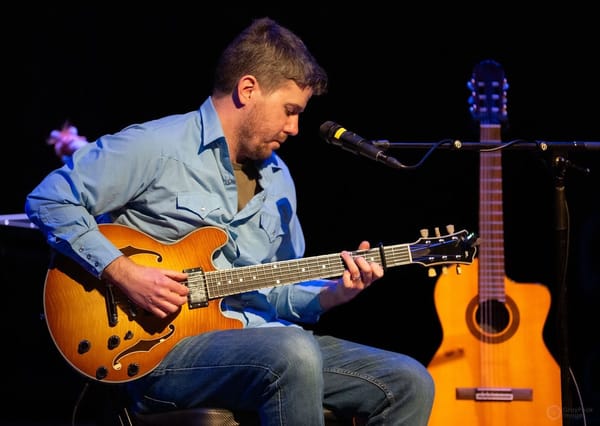
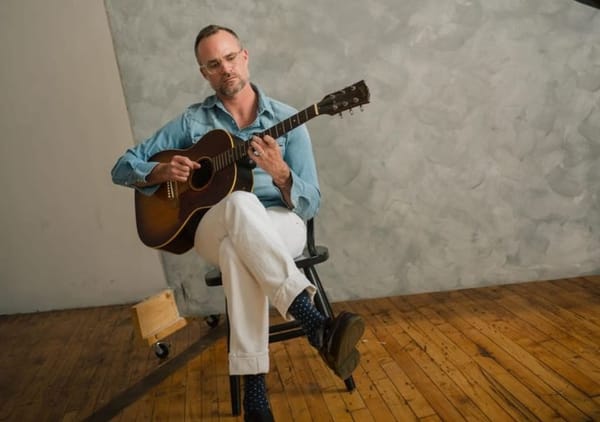
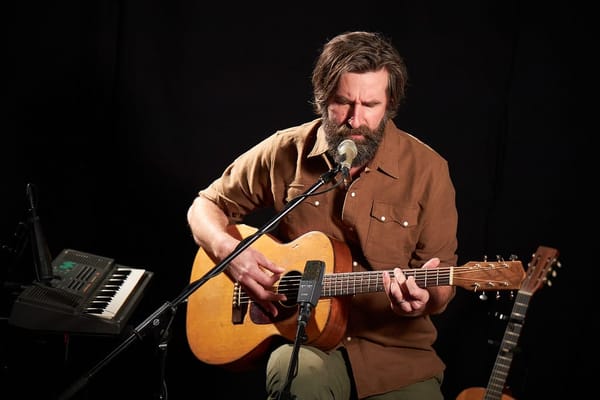
Harrison Whitford is an American guitarist, songwriter, and session musician known for his thoughtful playing style and deeply personal songwriting. Based in Los Angeles, he has built a strong reputation through both his solo work and collaborations with artists like Phoebe Bridgers, Matt Berninger, and Conor Oberst. Although he grew up around music as the son of Brad Whitford (of Aerosmith), Harrison has carved out his own sound, blending indie rock, folk, ambient textures, and expressive guitar work into something uniquely his own.
Whitford released his debut solo album, Afraid of Everything, in 2018. The album introduced listeners to his honest songwriting and understated approach to guitar playing. He followed it with Afraid of Nothing, a record filled with warm tones, atmospheric arrangements, and emotionally detailed songs. Rather than focusing on flashy technique, Whitford’s playing is centered around melody, texture, and supporting the feeling of each song.
In addition to his solo career, Whitford has become a respected touring and recording guitarist. His work with Phoebe Bridgers helped introduce him to a wider audience, and he has spoken about how collaborating with other musicians shaped his approach to songwriting and guitar. Known for his tasteful tone and creative use of vintage gear, Whitford has developed a style that feels both modern and timeless.
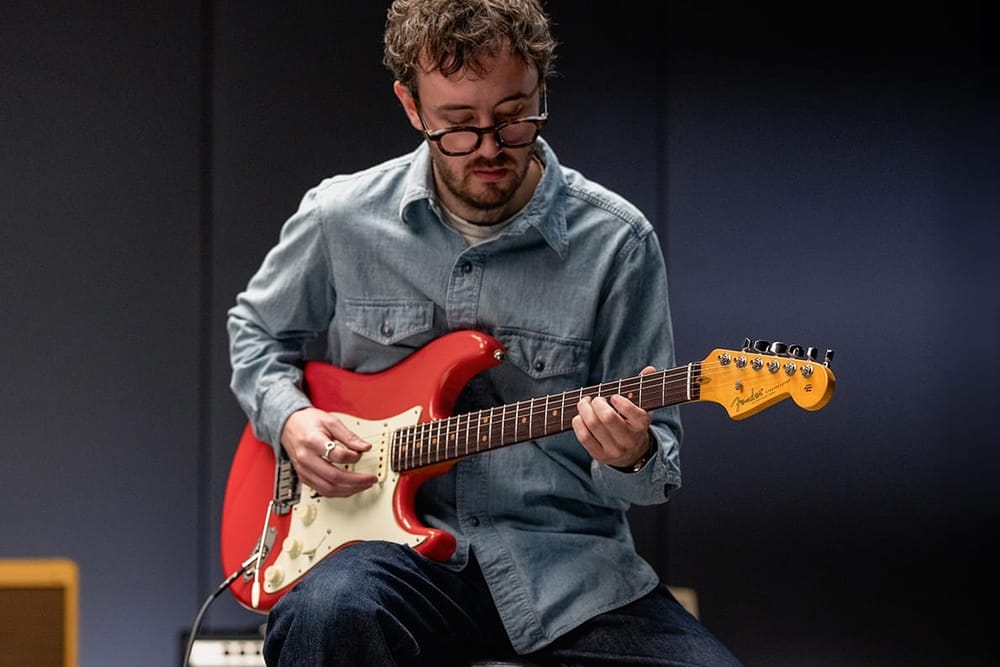
Harrisobn has also collaborated with brands such as Heritage Guitars and Fender for guitar demo videos. Check him out jamming with Molly Miller for a Heritage Guitars promo vid, and demoing the Fender American Ultra Luxe Vintage Stratocaster.
In 2025, Whitford teamed up with producer and songwriter Eli Hirsch to form the duo Attention Bird Utopia. Their debut album, Best of Kings, mixed indie rock, folk, and experimental pop influences into a relaxed and intimate collection of songs. The project reflected Whitford’s love of organic recording techniques, poetic lyrics, and guitar parts that serve the song rather than overpower it.
We connected with Harrison for a quick Q&A.
🎸 Q & A
What does your current guitar practice routine look like?
My practice routine is a lot less regimented than it used to be. Typically I think about improvising and writing when I pick up a guitar. I try to make playing as close to breathing as possible.
What's the best piece of advice you have for other guitar players?
Play like you mean it.
What’s one technique, habit, or concept that helped you level up as a player?
Chords are melodies intersecting.
What gear (guitar/amp/pedals) are you using lately—and why?
My 1949 Gibson LG-2
How did your project and Best of Kings album come about? Was there a specific musical or emotional thread you wanted that project to follow?
Me and my friend Eli Hirsch got along very quickly and bonded over many shared interests, music being chiefly among them. It felt natural to make a record together. We didn’t think too much about it.
What have you learned from playing in Phoebe Bridgers band that’s influenced your own writing or bandleading?
That a great song will tell you how it wants to be handled if you listen closely.
Your known for playing in alternate tunings a quite a bit. What are your favorite tunings, and what are the benefits of playing in different tunings?
I tend to play and write a lot in open D—open tunings can rearrange your sensory experience of the guitar.
What’s been your biggest challenge as a guitarist and musician?
Keeping my head above the water.
What’s next for you musically—any projects or goals you're working on?
Many projects and dreams all the time. A new record out in the world soonish.
⚡ Lightning Round
One album every guitarist should listen to?
Luiz Bonfa - Introspection
Desert island guitar and amp?
Gibson LG-2
What guitarist should everyone know about?
Dylan Day
News & Notes 🗞️
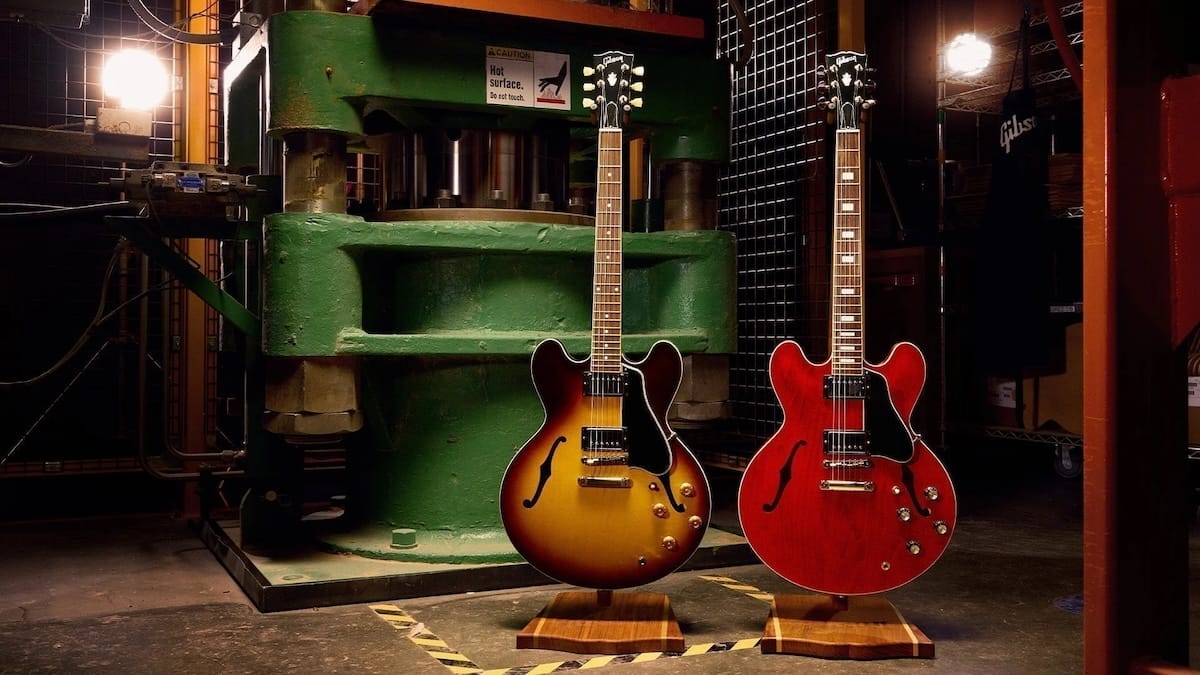
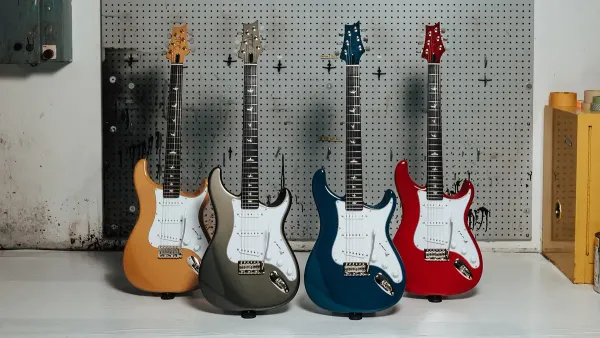
- Gibson announced two new 50s and 60s ES-335 reissues. The 50s model features a thicker neck, dot inlays, a larger pickguard, Custombucker Alnico 3 pickups, and is offered in Vintage Natural, Tobacco Burst, and Ebony. The 60s model has a thinner neck, block inlays, T-Type pickups, and is offered in Vintage Burst, Sixties Cherry, and Dark Walnut.
- Fender released a new Godzilla Distortion Pedal - which they say transforms your amp into a heat-ray–breathing beast, capable of everything from thick rhythmic chugging to soaring lead tones that cut through any mix.
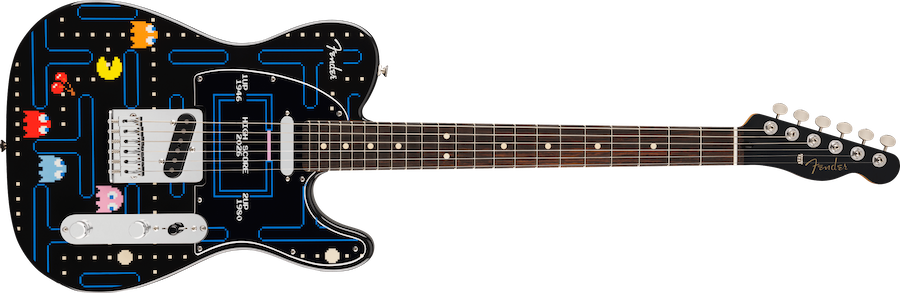
- Fender also announced a limited edition x PAC-MAN™ Player II Telecaster®. Developed in close partnership with the PAC-MAN brand team, the guitar features a fast and fluid Modern "C"-profile neck, a 9.5"-radius fingerboard with rolled edges, 22 medium jumbo frets. It cool to see a limited edition like this being offered as a Player Series model, oppossed to Custom Shop. MSRP is $1,099.
- Lyle Brewer joined The Fretboard Journal podcast. They talked about his journey as a professional guitarist and educator, how he ended up teaching at Berklee, his influences (from Pat Metheny to Andy Shauf), his love for nylon-string guitars, workshopping new music on the internet, and more. Apple | Spotify
- Here are the 3 key takeaways from the Lyle Brewer interview:
- Tone and craft over technique. Brewer's deepest investment on nylon-string guitar has been obsessing over right-hand technique and sound quality — treating how a note is produced as seriously as which notes are played. That same philosophy carries into his songwriting: strong melodies, subtle harmony, and purposeful arrangement choices matter more than technical flash.
- The best players make complexity invisible. Brewer returns to this idea repeatedly — whether citing Wes Montgomery or drawing inspiration from Canadian songwriter Andy Shauf, his north star is using advanced harmonic and melodic tools in a way that serves the music rather than showcases the musician. He explicitly wants his originals to never feel like "a guitar clinic."
- Sharing your work publicly is a creative lifeline. Posting music on the Internet — even works-in-progress — has been genuinely therapeutic for Brewer, forcing him to make peace with where he is rather than endlessly deferring to some future "ready" state. Prolific output (13 albums) and openness online are, for him, as much a mental health practice as a career strategy.
- Here are the 3 key takeaways from the Lyle Brewer interview:
- Molly Tuttle joined The Other 22 Hours podcast, chatting about genre fluidity, artistic anxiety, micro-managing tour travel, and much more. Apple | Spotify
- 3 Key Takeaways from the Molly Tuttle Interview
- Trust your intuition creatively and professionally
Molly said one of the biggest lessons she’s learned is to trust her gut when making creative or career decisions, even when outside opinions push her in another direction. - Touring is emotionally exhausting but creatively rewarding
She talked about the difficulty of constantly transitioning between home life and tour life, and how touring can make songwriting harder because so much energy goes into performing and logistics. - She intentionally refuses to stay in one musical lane
Molly explained that her shift beyond bluegrass was driven by the songs themselves, and that she values creative freedom over sticking to a formula that already works commercially.
- Trust your intuition creatively and professionally
- 3 Key Takeaways from the Molly Tuttle Interview
Enjoy this newsletter? Please forward to a friend or hit reply to share your thoughts.🤘